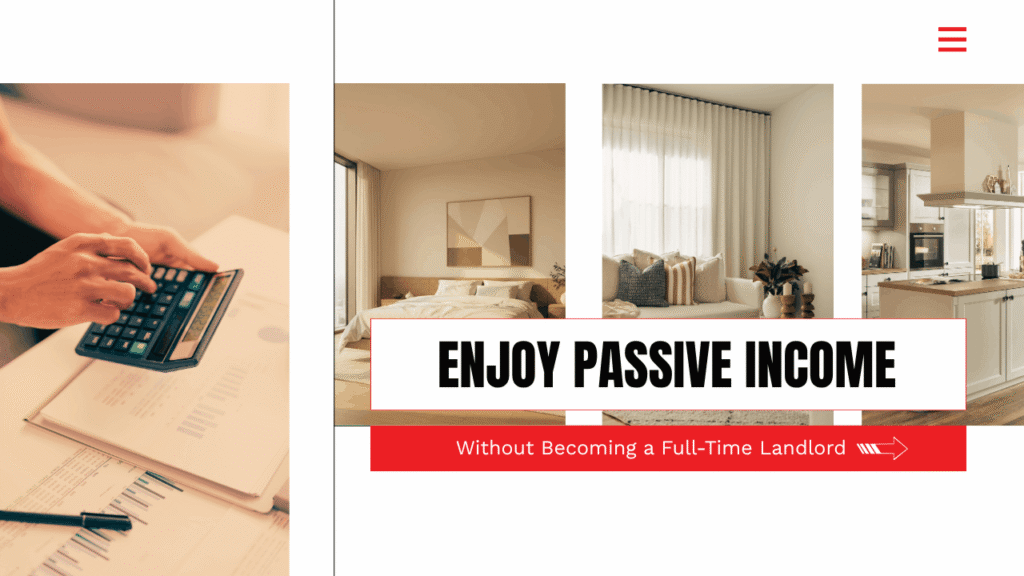
How much work should you be putting into your rental property?
That depends. Are you interested in being a full-time landlord? Or would you rather reap the benefits of passive income without responding to every maintenance request?
Owning rental property in California seems like it should be a path to passive income. But many owners quickly discover that “passive” is unrealistic. Between tenant communications, legal compliance, maintenance coordination, and financial oversight, self-managing a rental can resemble a second full-time job. The good news is that rental income can be largely passive if owners structure their investments correctly and avoid common traps.
Quick Overview:
|
Rental Property Is a Business, Not a Side Hustle
California’s rental market is heavily regulated, with layers of state and local laws governing habitability, rent increases, notices, and tenant rights. These rules apply regardless of whether an owner manages one unit or one hundred. Treating property ownership as a casual side project often leads to missed deadlines, improper notices, or inconsistent enforcement of lease terms, all of which create risk.
True passive income begins when owners acknowledge that rental property is a business and build systems that allow it to operate without constant hands-on involvement.
You Cannot be a “Low-Effort” Landlord
Many owners assume that once a tenant is placed, their involvement will be minimal. Tenants generate ongoing operational needs: maintenance requests, renewals, inspections, compliance updates, and occasional disputes. Even stable tenants require oversight to ensure the property remains habitable and legally compliant.
The most time-consuming aspect isn’t always the big emergencies. It’s the accumulation of small, unpredictable tasks that demand immediate attention. Responding personally to every issue keeps owners reactive instead of strategic.
Passive Income Requires Professional Support
Passive income does not mean ignoring the property. It means delegating day-to-day operations to professionals who are equipped to handle them efficiently. Property managers, licensed vendors, and accounting systems transform active involvement into oversight.
For example, professional property management firms handle:
- Tenant screening
- Rent collection
- Maintenance coordination
- Compliance with evolving California regulations.
Owners remain informed through transparency and communication, but they are no longer responsible for executing each task themselves. This shift dramatically reduces time commitment while improving consistency and risk management.
This is what passive investing looks like.
Protecting Time, Not Just Cash Flow
 Many rental owners focus solely on maximizing monthly cash flow, overlooking the value of their own time. Answering late-night calls, coordinating repairs, or researching new local ordinances has a real opportunity cost. Time spent managing a property is time not spent growing a portfolio, advancing a career, or simply enjoying life.
Passive income is ultimately about scalability. A system that relies on the owner’s constant availability cannot scale without increasing stress and exposure to error. A system built around professional delegation can grow in a way that’s smart and profitable.
Enjoying passive income means designing ownership around longevity. That includes setting boundaries, leveraging expertise, and accepting that paying for professional support is an investment in stability, compliance, and peace of mind.
Rental property investments can deliver reliable income without turning owners into full-time landlords. The key is recognizing that passive income isn’t accidental. Instead, it’s built through smart structure and intentional delegation.
Let’s make sure your investments are both passive and profitable. Contact us at ZenPro Property Management.
